 Skip to content
Advanced Polyaspartic Floor Coatings in The Rochester, MN Area
- One Day Installations Available
- fully Free Honest Estimates
- Honest Work Backed by Real Results


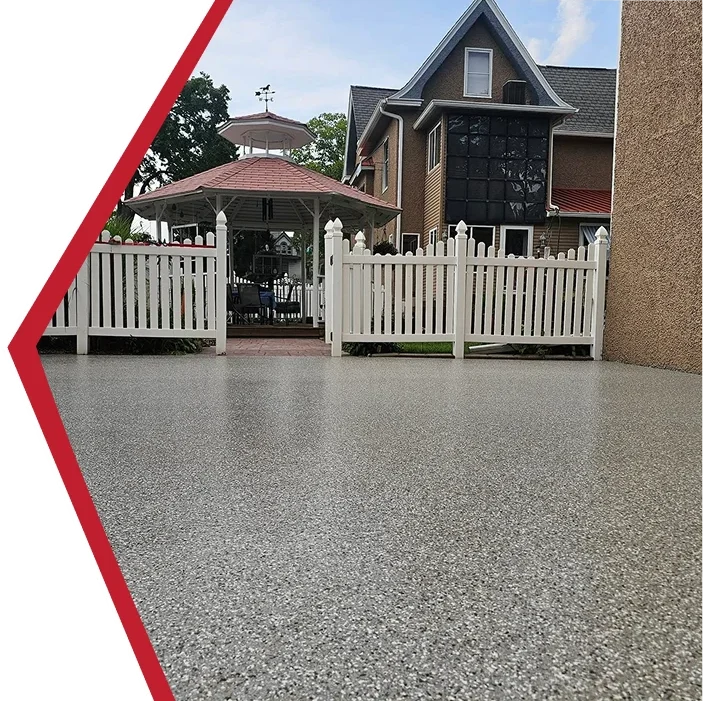
For years, epoxy was the standard, but modern chemistry has given us a far superior option for protecting concrete floors: the polyaspartic floor coating. At Midwest Surface Coatings, this advanced material is the key to our signature one-day installations and the secret behind the incredible longevity of our floors.
We use polyaspartic coatings for a finish that cures in hours, not days. A finish that will never yellow or fade in the sun, and a finish that offers resistance to the harsh conditions of a Minnesota climate. It is, simply put, the best protective topcoat available for concrete floors today.
What is a Polyaspartic Coating?
A polyaspartic is a high-performance type of Polyurea coating. Traditional polyureas cure almost instantly, a polyaspartic is scientifically modified to have a longer working time and give a glass-like finish.
It is a two-component material that creates a chemical reaction resulting in a crystal-clear, incredibly hard, and flexible membrane. We use it primarily as the final topcoat on most of our flooring systems.

Why We Use Polyaspartic
We specialize in polyaspartic because of the clear, undeniable benefits for our Rochester customers.
- One-Day Installation
While epoxy can take 3-5 days to fully cure, a polyaspartic topcoat allows you to walk on your floor within a few hours and return it to full service the very next day.
- UV Stability
Unlike epoxy, which will yellow and become brittle over time, our polyaspartic topcoats are guaranteed to remain crystal clear and never fade. This makes them essential for Patios and any interior space.
- Durability & Clarity
A high-gloss polyaspartic floor has exceptional scratch resistance for heavy traffic and impacts. Its superior clarity also enhances the color and depth of the decorative flakes or base coat beneath it.
- All-Weather Application
Polyaspartic can be applied in a much wider range of temperatures than traditional epoxy, from cold Minnesota fall days to warm summer afternoons.
The Go-To Topcoat
Polyaspartic is the protective shield on our flooring, for the final layer of strength and beauty.
- The Flake System
A polyaspartic topcoat is what captures the decorative vinyl flakes, for an easy-to-clean and incredibly durable surface for our polyaspartic garage floor coating systems.
- The Solid Color System
We protect our solid color floors with a polyaspartic topcoat to prevent the color from fading and to provide a tough, scuff-resistant finish.
- The Grind and Seal System
For grind and seal, a polyaspartic sealer offers durability and longevity over a standard acrylic sealer.
Our Polyaspartic Process
01Surface Preparation
We always start by diamond grinding the concrete to ensure a permanent bond.
02Basecoat & Design
We apply the epoxy or polyurea basecoat and the decorative element, such as flakes.
03Topcoat
After the basecoat cures, we scrape and vacuum the surface to ensure it is perfectly smooth and clean.
04Mixing and Application
The two components of the polyaspartic are professionally mixed. Our crew then skillfully rolls out the material for a wet edge to ensure a glass-like finish without any roller marks.

Why Trust Midwest Surface Coatings?
As a local, family-owned business, we have invested heavily in the training and equipment necessary to be Rochester’s leading installers of polyaspartic systems. We don’t cut corners by using cheaper, slower-curing materials. We use the best because it delivers the best results for our customers.
A polyaspartic coating provides a protective, high-gloss finish that is unmatched in the coatings world. We are experts in both and can guide you to the right choice. See the clarity of work in our Past Work Gallery.
Polyaspartic Floor Coatings in Rochester – FAQs
Is polyaspartic better than an epoxy floor?
For a topcoat, yes. Polyaspartic is more durable, more scratch-resistant, and is 100% UV stable.
Will a polyaspartic floor turn yellow?
No. Our polyaspartic topcoats are completely UV stable, meaning they are not affected by sunlight and will remain crystal clear for the life of the floor.
How long does a polyaspartic floor take to cure?
It heals very quickly. You can typically walk on a polyaspartic floor in as little as 4-6 hours and return it to full service, including parking vehicles, within 24 hours.
Is a high-gloss polyaspartic floor slippery?
A smooth polyaspartic floor can be slippery when wet.
Ready to learn more about our one-day floor systems?
Proudly Serving Southern Minnesota and Western Wisconsin
 Minnesota